

Dog Food for Sensitive Stomachs: 10 Best Brands for 2026

Finding the right dog food for sensitive stomachs can make mealtime much easier for dogs that frequently experience loose stools, gas, digestive upset, or picky eating.
But with hundreds of formulas available online, choosing the right one can be confusing. The best choice depends on your dog’s age, size, food tolerance, dietary needs, and the type of food they prefer.
For this guide, we looked at important factors such as digestibility, protein sources, fiber, prebiotics, food format, life-stage nutrition, ingredient transparency, and nutritional adequacy to help you compare some of the most popular options available to U.S. dog owners.
10 Best Dog Foods for Sensitive Stomachs
1. Purina Pro Plan Sensitive Skin & Stomach — Best Overall

Purina Pro Plan Sensitive Skin & Stomach
Best for: Dogs needing a dedicated sensitive-stomach formula
Food type: Dry and wet
Why we like it: Wide selection of formulas for puppies, adults, seniors, small breeds, and large breeds.
Purina Pro Plan’s Sensitive Skin & Stomach range is one of the easiest places to start when shopping for food specifically designed around digestive sensitivity.
The range includes different protein and formula options, including salmon, turkey and lamb recipes, as well as formulas designed for different life stages and breed sizes. Purina also highlights prebiotic fiber and digestibility as features of its sensitive-stomach recipes.
2. Hill's Science Diet Sensitive Stomach & Skin — Best Dry Food
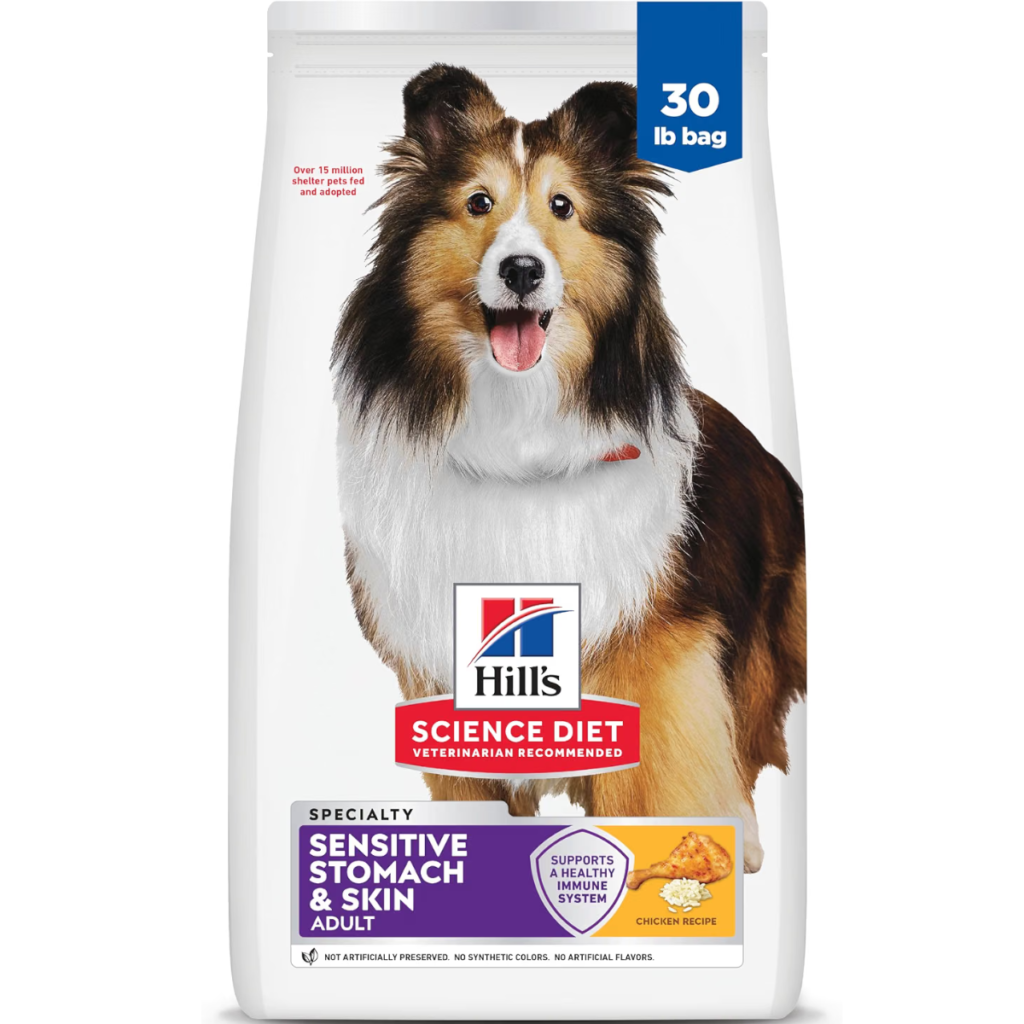
Hill’s Science Diet Sensitive Stomach & Skin
Best for: Adult dogs needing a highly digestible dry food
Food type: Dry and wet
Hill’s Science Diet Sensitive Stomach & Skin is designed specifically around digestive and skin support.
Its dry formulas include prebiotic fiber and are marketed as highly digestible to support nutrient absorption. Current options include chicken, salmon and other recipe variations, along with smaller-bite choices.
The salmon and brown rice recipe, for example, provides a dry-food option with salmon as the featured animal protein and includes prebiotic fiber.
3. Royal Canin Digestive Care — Best for Digestive Support
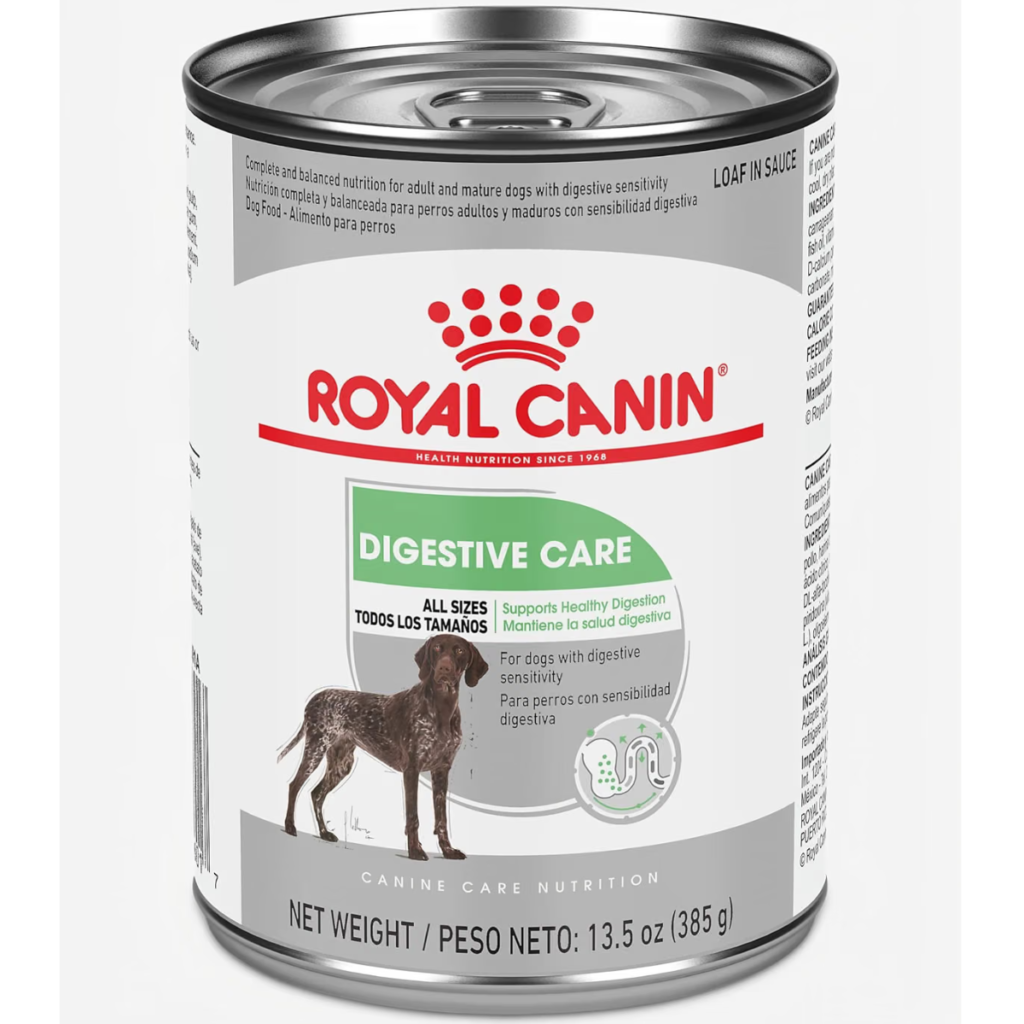
Best for: Dogs needing additional digestive support
Food type: Dry and wet
Royal Canin’s Digestive Care range focuses specifically on digestive health and stool quality.
The formulas use highly digestible proteins along with prebiotics and dietary fibers. The range is also available in different size-specific formulas, which can make it easier to select a food based on your dog’s size.
4. Purina Pro Plan Sensitive Stomach Salmon & Rice — Best for Adult Dogs

Purina Pro Plan Sensitive Skin & Stomach
Best for: Adult dogs that do well with salmon-based recipes
Salmon-based sensitive-stomach formulas are popular with owners looking for an alternative to more common meat proteins.
Purina’s current Sensitive Skin & Stomach range includes salmon-based recipes as well as other protein options. The formulas are designed to provide daily nutrition while supporting digestive health.
5. Hill's Science Diet Sensitive Stomach & Skin Salmon & Brown Rice
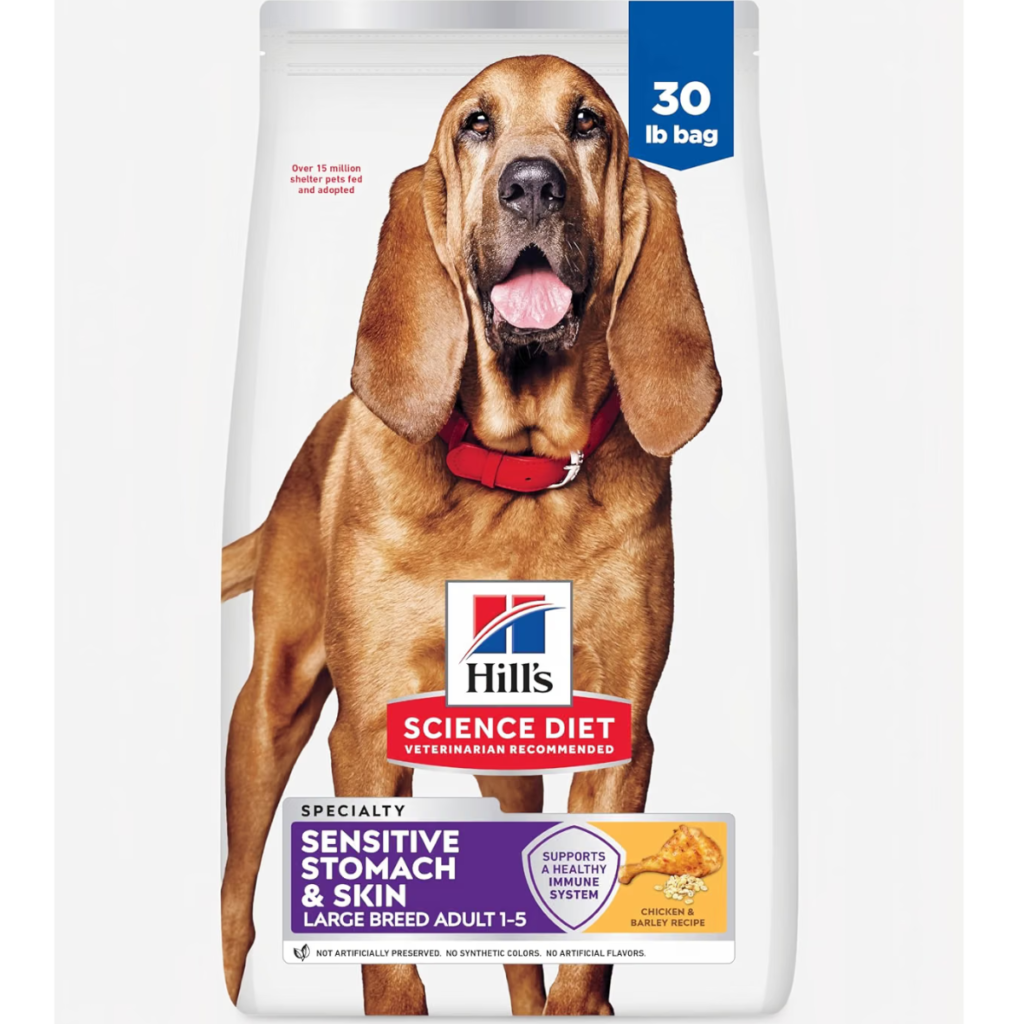
Hill’s Science Diet Salmon & Brown Rice
Best for: Dogs that prefer salmon
This recipe combines salmon with brown rice and includes prebiotic fiber. Hill’s lists it as a highly digestible adult formula designed to support digestive and skin health.
It can be a useful option for owners who want a sensitive-stomach formula without choosing a grain-free recipe.
Pros
- Salmon protein
- Brown rice
- Prebiotic fiber
- Highly digestible formulation
- Adult-specific nutrition
6. Purina Pro Plan Sensitive Skin & Stomach Puppy — Best for Puppies
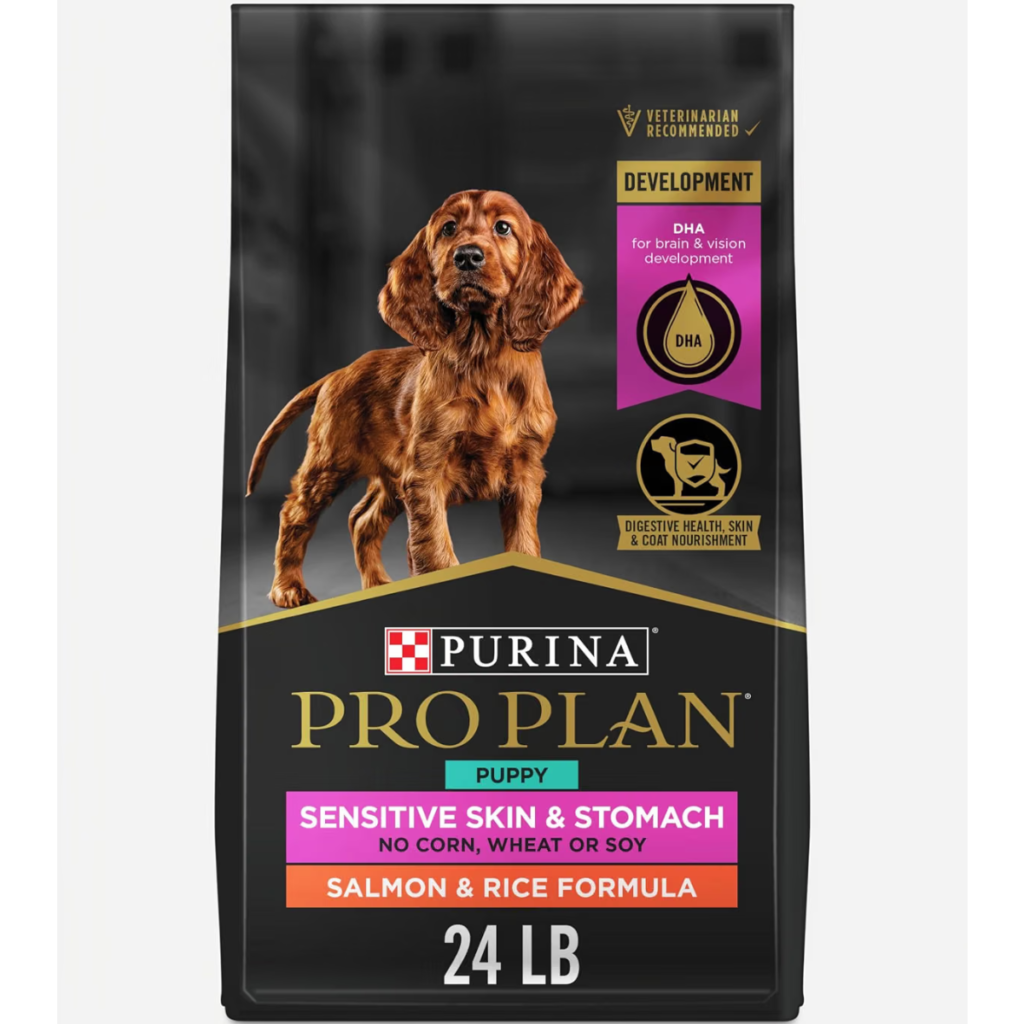
Purina Pro Plan Sensitive Skin & Stomach Dog Food
Best for: Puppies with sensitive digestion
Puppies should not simply be given an adult sensitive-stomach food because their nutritional requirements are different.
Purina offers puppy-specific sensitive-stomach formulas, including salmon-based options for growing dogs.
When shopping for puppy food, check the nutritional adequacy statement and make sure the recipe is intended for growth or the appropriate life stage. AAFCO recommends selecting food according to the dog’s species, life stage and condition.
7. Hill's Science Diet Sensitive Stomach & Skin Small Bites — Best for Small Dogs
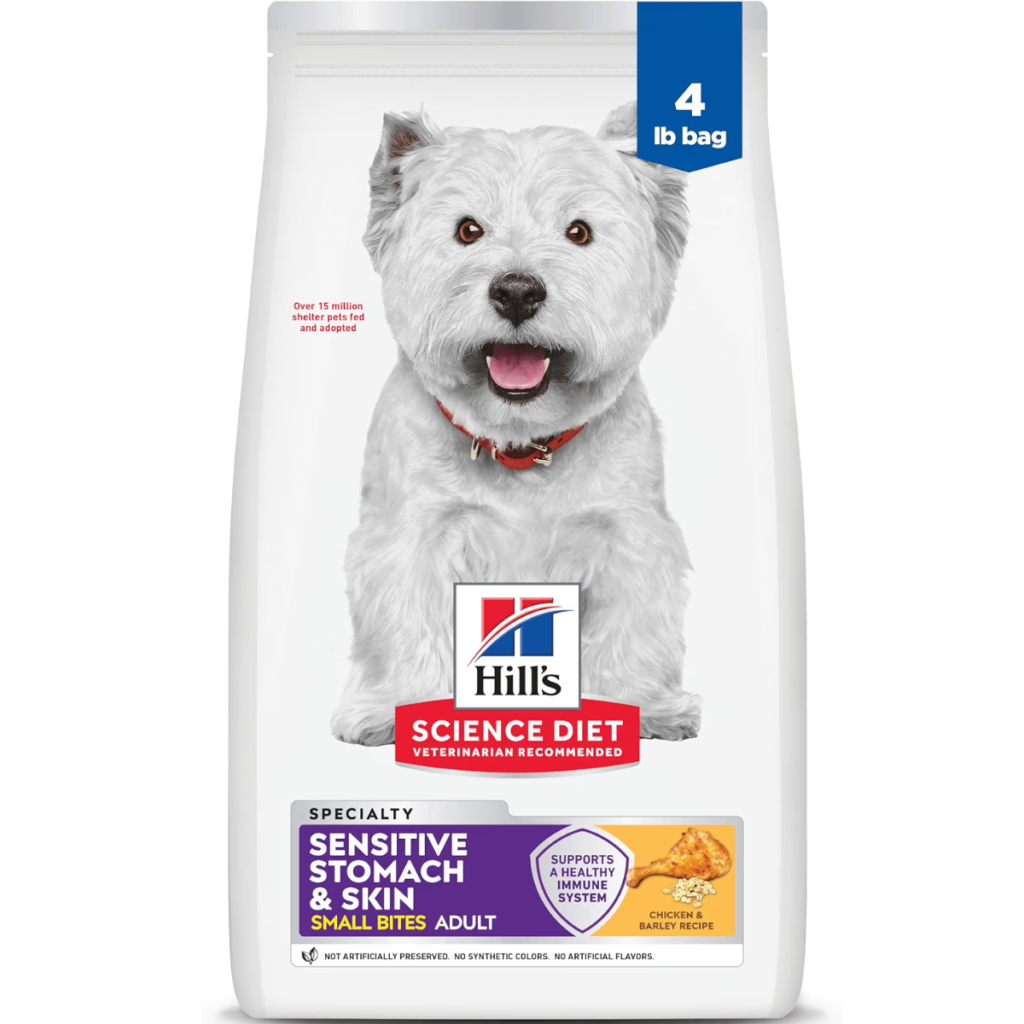
Hill’s Science Diet Small Bites Sensitive Stomach & Skin
Best for: Small and medium-sized adult dogs that prefer smaller kibble
Kibble size can matter for smaller dogs, particularly those that have difficulty chewing larger pieces.
Hill’s offers a Small Bites Sensitive Stomach & Skin formula with prebiotic fiber and a highly digestible formulation.
Pros
- Smaller kibble
- Digestive-health focused
- Prebiotic fiber
- Adult nutrition
- Skin and coat support
8. Royal Canin Digestive Care Size-Specific Formulas
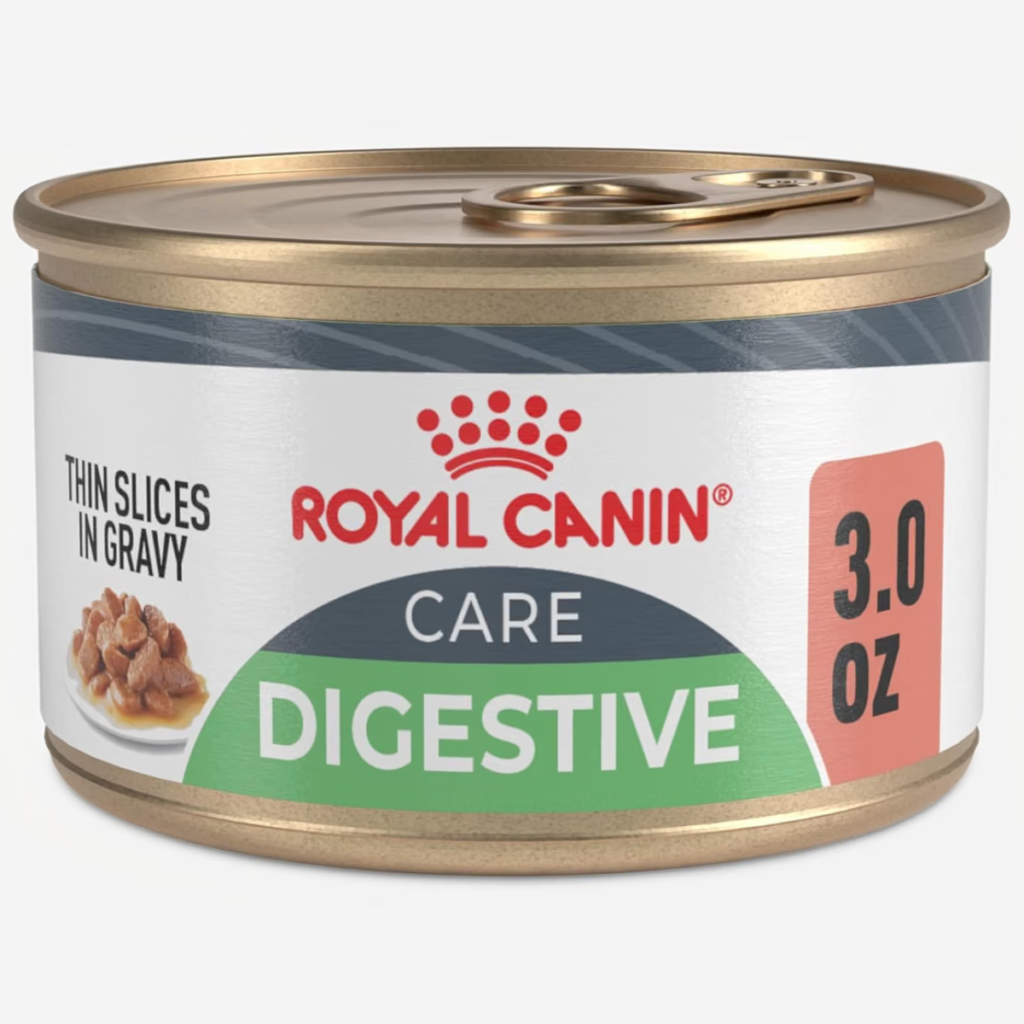
Royal Canin Digestive Care for Dogs
Best for: Owners looking for size-specific digestive food
One useful feature of Royal Canin’s Digestive Care range is its focus on different dog sizes.
The company currently offers digestive-care options designed for small, medium and large dogs, with recipes formulated around digestibility, prebiotics and dietary fiber.
Pros
- Size-specific choices
- Dry and wet formats
- Prebiotics
- Fiber
- Digestive-focused formulation
9. Hill's Science Diet Sensitive Stomach & Skin Wet Food — Best Wet Food
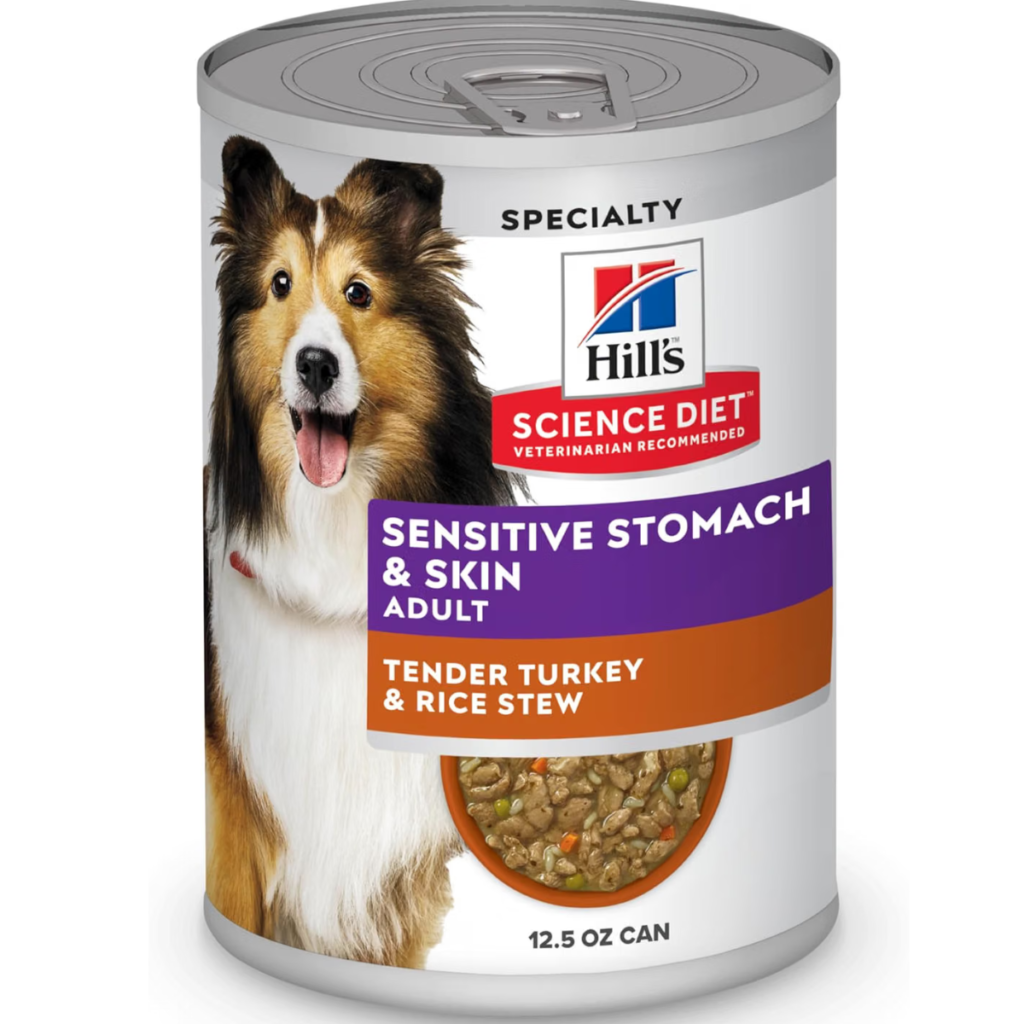
Hill’s Science Diet Sensitive Stomach & Skin Wet Food
Best for: Dogs that prefer wet food
Some dogs simply prefer the texture and aroma of wet food.
Hill’s offers Sensitive Stomach & Skin wet recipes, including chicken and turkey varieties. The formulas are designed for adult dogs with sensitive stomach or skin needs.
Pros
- Soft texture
- More moisture than dry kibble
- Sensitive-stomach formulation
- Multiple flavors
10. Royal Canin Gastrointestinal Diets — Best Veterinary Diet Option

Royal Canin Gastrointestinal Dog Diets
Best for: Dogs with specific gastrointestinal needs
Royal Canin also offers gastrointestinal diets designed for dogs with particular digestive concerns.
Some formulas have specific nutritional characteristics, such as controlled fat levels and carefully balanced fiber. These products are different from ordinary over-the-counter “sensitive stomach” foods and may be appropriate only when recommended for a dog’s particular condition.
How to Choose the Best Dog Food for a Sensitive Stomach
There is no single ingredient that makes a dog food perfect for every sensitive stomach.
1. Look for Digestible Nutrition
Sensitive-stomach formulas commonly focus on digestibility and carefully selected nutrients.
For example, current products from Purina, Hill’s and Royal Canin emphasize digestibility, fiber or prebiotic support in their sensitive-digestion ranges.
2. Choose the Right Protein
Some dogs do better with one protein source than another.
Salmon, chicken, turkey, lamb and other proteins are available in sensitive-stomach formulas. If your dog has a known food allergy, however, the appropriate protein should be selected based on the dog’s dietary history and veterinary advice rather than simply choosing a “novel” protein.
3. Consider Fiber and Prebiotics
Fiber and prebiotic ingredients are common features in digestive-support formulas.
4. Check the Life Stage
Puppy, adult and senior dogs have different nutritional requirements.
5. Consider Your Dog’s Size
Small dogs may benefit from smaller kibble, while large breeds may have different calorie and feeding requirements.
6. Dry vs. Wet Food
Both can work.
Dry food is convenient, easy to measure and simple to store.
Wet food provides more moisture and can be more appealing to picky eaters.
The better choice is the one that provides appropriate nutrition and agrees with your individual dog.
7. Check the Nutritional Adequacy Statement
Don’t choose a dog food only because the front of the bag says “sensitive stomach.”
Look for the nutritional adequacy statement showing that the food is complete and balanced for the appropriate life stage. AAFCO specifically recommends using this information when selecting pet food.
Grain-Free Dog Food for Sensitive Stomachs: Is It Better?
Not necessarily.
Many shoppers search for grain-free dog food for sensitive stomachs, but grain-free does not automatically mean better digestion.
Some dogs may need to avoid a particular ingredient, while others can eat grain-inclusive food without problems. Therefore, don’t eliminate grains simply because your dog has a sensitive stomach.
If your dog does well on a complete and balanced food containing rice, oats or other grains, there may be no reason to remove them.
Limited Ingredient Dog Food for Sensitive Stomachs
Limited-ingredient recipes can be useful when you want a simpler ingredient profile.
They may also be considered when investigating food sensitivities. However, a food labeled “limited ingredient” isn’t automatically a veterinary elimination diet.
If your veterinarian suspects a food allergy, follow the recommended dietary trial rather than relying only on marketing terms.
How to Switch to Sensitive Stomach Dog Food

Don’t suddenly replace your dog’s existing food with a completely different formula.
A gradual transition is usually easier on digestion.
A simple schedule is:
- Days 1–2: 75% old food + 25% new food
- Days 3–4: 50% old food + 50% new food
- Days 5–6: 25% old food + 75% new food
- Day 7: 100% new food
If your dog has a particularly sensitive digestive system, you may need to make the transition more slowly.
What Should You Avoid When Your Dog Has a Sensitive Stomach?
When trying to determine whether a new food works, avoid introducing too many other changes at the same time.
Try to limit:
- Sudden food changes
- Excessive treats
- Table scraps
- Very rich foods
- Multiple new supplements
- Constantly switching protein sources
Keeping the diet consistent makes it easier to determine whether the new food is actually working.
When Should You Talk to a Veterinarian?
A sensitive stomach shouldn’t be used as an explanation for every digestive problem.
Talk to your veterinarian if your dog has:
- Repeated vomiting
- Persistent diarrhea
- Blood in the stool
- Significant weight loss
- Loss of appetite
- Dehydration
- Severe abdominal discomfort
- Extreme lethargy
- Recurring digestive problems
A veterinarian can help determine whether your dog simply needs a different diet or whether an underlying health problem needs attention. https://www.worldfoodlive.com
Frequently Asked Questions
There isn't one food that is best for every dog. Purina Pro Plan Sensitive Skin & Stomach, Hill's Science Diet Sensitive Stomach & Skin and Royal canin Digestive Care are among the major U.S. product ranges specifically formulated around sensitive digestion. The right choice depends on your dog's individual needs.
Look for a complete and balanced formula with appropriate protein, digestible nutrition and a suitable fiber profile. Many sensitive-stomach foods also include prebiotic fiber.
Purina Pro Plan has a dedicated Sensitive Skin & Stomach range with dry and wet options, multiple proteins, and formulas for different life stages and breed sizes.
Neither is automatically better. Both wet and dry foods can work for dogs with sensitive digestion. Choose based on your dog's nutritional needs, preferences and tolerance.
Not necessarily. Grain-free food is not automatically easier to digest. If your dog tolerates grains, there may be no reason to eliminate them.
Yes, but the food should specifically be formulated for puppies or the appropriate growth stage. Don't automatically feed an adult sensitive-stomach formula to a growing puppy.
Yes, provided the formula is appropriate for the senior dog's nutritional and health needs. Senior dogs with recurring digestive problems should be evaluated by a veterinarian.
We use novel proteins like duck and lamb in our Singles recipes to provide delicious, high-quality nutrition while avoiding common proteins like chicken or beef, which can sometimes be the source of dietary intolerances for certain dogs.
Signs that your dog may benefit from a change in diet include frequent gas, loose stools, or occasional vomiting. If these symptoms persist, it is important to evaluate their current food and consult with your veterinarian to rule out any underlying medical conditions.
Both wet food and dry food varieties can be good for dogs with sensitive stomachs. According to Carmella, it’s more important to look for a label that specifies whether a dog food is designed to be easily digestible. Fresh food offers the advantage of extra hydration and more appeal, especially for picky eaters.
When changing to Naturo, you should transition to the new diet gradually in order to give your dogs digestive system time to adjust to the change. Ideally, these transitions should happen over 14 days. During this transition, you will gradually incorporate more and more of the new food by mixing it with your dog's current diet.